“The restaurant has been closed. It is no longer offering food. We want to provide you with information on how to cook your own tasty Australian dishes right in your own home now that you can no longer visit the restaurant to eat.”
The first humans to settle in Australia arrived around 65,000 years ago as people migrated from what is now Southeast Asia over land bridges and short sea-crossings. These early inhabitants are the ancestors of modern-day Indigenous / Aboriginal Australians.
When Europeans began colonizing Australia in the late 1700s, most of the Indigenous Australians were hunter-gatherers, with spiritual values based on reverence for the land and its inhabitants. Some engaged in seasonal horticulture, but there were no large-scale farming. Indigenous recipes and methods for food preparation that have survived into our time are commonly referred to as bush tucker. Bush tucker recipes are based on locally available food sources and can therefore vary a lot from one region to the next.
Many of the European settlers in the 18th and 19th century had their culinary roots in the British Isles and this influence is still very strong in Australia. The colonizers brought not just recipes and food traditions but also farming globalization that had a huge impact on Australia and changed the range of available food types on the continent. This is how agricultural products from the old world, such as sheep meat and wheat, became staples in the Australian diet.
In the 20th century, new waves of migration reached Australia, especially from the Mediterranean region and East Asia, and this also had a major impact on food practices in the country – combined with the increased globalisation which made it easier and more affordable to import food and be inspired by foreign dishes.
In the early 21st century, organic and bio-dynamic foods have become increasingly popular in Australia, and are now much more abundant in supermarkets than before. We can also see a revitalized interested in both traditional bush tucker and new ways of utilizing native flora and fauna as food.
Generally speaking, Australians eat a lot of fruit and it is often served fresh – either as it is or in fruit salads, smoothies and similar. In recent years, there has been a revived interest in native Australian fruits, which are often endemic to Australia.
Here are a few examples of native Australian fruits:
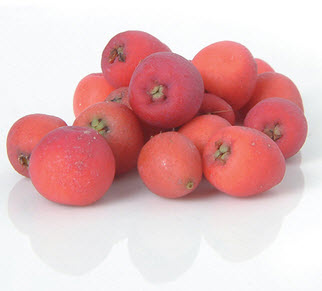
Desert quandong
The desert quandong (Santalum acuminatum) chiefly grows in the central desert and southern areas of Australia. The fruit is known as quandong or native peach. The fruit is green at first but will turn red as it ripens in late spring or early summer. A waxy outer layer makes it shiny. The average size of the fruit is 2 – 4 cm across.
Riberry
The riberries grow on Syzygium luehmannii, a coastal rain-forest tree native to Australia. The tree is known under several different names, including riberry tree, cherry alder, clove lilli pilli, small leaved lilly polly, and cherry satinash.
A ripe riberry is red, pear-shaped and 10-15 mm long. The riberries mature from December to February. The berries taste tart and the flavor is often described as cranberry with an undertone of clove.
In Australia, riberries are chiefly used to make riberry jam and riberry sauce.
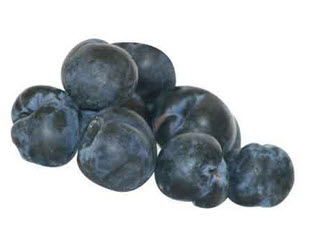
Illaware plum
The Illaware plum (which isn’t a real plum) grows on an evergreen tree named Podocarpus elatus. The fleshy part of the seed cone is used in condiments.
This tree is known under several different common names in English, including Brown pine, Plum pine, and Illaware plum tree. This tree is endemic to Australia’s eastern coast.
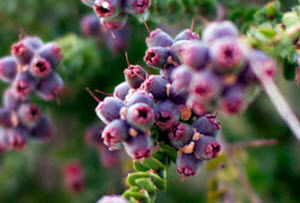
Muntries
Muntries (Kunzea pomifera) are low-growing plants native to Australia’s southern coast. The plants produce berries that are roughly 1 cm in diameter and taste a bit like an apple but spicier. The texture is crunchy. Mature berries are green with a tinge of red.
The berries are known under many different names, including Native cranberries, Emu apples, Muntaberry, Monterry, and Munthari.
The berries are famous for containing several times more antioxidants than blueberries.
K. pomifera was one of the first Australian plants successfully cultivated in England (1889).
Australian Bush Foods
More Native Australian Fruits
A field guide to traditional Indigenous bush tucker and distinctive commercial wild-harvest fruits across Australia.
Small, pale yellow-green almond-sized drupe (1.5–2.5 cm). Ripens March to June.
Stewed apple & citrus: Famous for having the highest recorded natural vitamin C content on Earth. Eaten raw by First Nations peoples or powdered for health tonics, preserves, and skincare.
Rainforest understory of SE Queensland and northern NSW
Slender, finger-like cylindrical fruit (4–8 cm) ranging from dark green to purplish-black. Harvested January to April.
Zesty burst: Filled with spherical, translucent juice vesicles that burst in the mouth like caviar. Prized in fine dining for seafood garnishes, ceviche, cocktails, and dressings.
Davidson’s PlumDavidsonia jerseyana / D. pruriensAKA: Ooray, Davidsonian Plum
Northern NSW & Far North QLD
Wet subtropical and tropical rainforests
Deep purple to burgundy fruit (4–5 cm) growing directly on the tree trunk. Matures summer to autumn.
Intense tartness: Striking ruby-red flesh with high acidity and deep tannin notes. Too sour to eat out of hand; widely used in gourmet jams, reductions, marinades, gin infusions, and desserts.
Bush TomatoSolanum centraleAKA: Kutjera, Desert Raisin
Central Australia
Arid red-sand plains and desert shrublands
Small round berry (1–1.5 cm) that turns yellow and naturally sun-dries on the bush to a wrinkled brown raisin. Harvested winter to early spring.
Caramelized savory: Strong sun-dried tomato and smoky caramel aroma with a piquant finish. Ground into seasoning rubs for kangaroo and red meat, or blended into curries, relishes, and savory breads.
Lemon AspenAcronychia acidulaAKA: Pigeon Berry
Atherton Tablelands & Wet Tropics
High-elevation rainforests of Far North Queensland
Pale yellow to ivory star-creased berry (2–2.5 cm) with a firm core. Fruits January to April.
Grapefruit & mango spice: Tart citrus flavor with notes of coniferous resin and lemongrass. Popular in seafood glazes, sorbets, craft ciders, and tropical chutneys.
Midyim BerryAustromyrtus dulcisAKA: Midgen Berry
Eastern Seaboard
Coastal heathlands and sandy wallum dunes from NSW to Fraser Island
Small, translucent white to speckled purple-grey berry (6–8 mm). Harvested late summer to autumn.
Sweet spiced apple: Naturally sweet and aromatic with distinctive ginger and nutmeg undertones. One of the best Australian native berries for fresh eating straight from the bush, pies, or fruit salads.
Bright crimson aggregate berry (up to 2–3 cm across). Yields abundantly from winter through late spring.
Mild sweet berry: Reminiscent of a European raspberry but firmer, milder, and well-suited to warm humid climates. Eaten fresh, frozen, or made into bright jams, coulis, and tarts.